When a police officer shoots an unarmed person, conducts a search without a warrant, or arrests someone without any factual basis, those acts do not just disappear into a use-of-force report and an internal affairs file. They are constitutional violations. And in federal court, the law gives victims a direct path to accountability.
That path runs through 42 U.S.C. Section 1983, a Reconstruction-era statute that has become the central vehicle for civil rights litigation against state and local government actors. This article explains how Section 1983 claims work, what violations support a lawsuit, how the qualified immunity defense shapes the terrain, and what Texas plaintiffs should realistically expect from the process.
Table of Contents
- Origins and Purpose of Section 1983
- The Elements of a Section 1983 Claim
- Constitutional Violations That Support a Claim
- Qualified Immunity: The Main Obstacle
- Suing the City: Monell Claims
- Damages Available to Plaintiffs
- How Long These Cases Take
- Managing Finances During a Long Civil Rights Case
- When Criminal Defense and Civil Rights Overlap
- Frequently Asked Questions
Origins and Purpose of Section 1983
Congress passed what is now Section 1983 in 1871 as part of the Civil Rights Act of that year, also called the Ku Klux Klan Act. The legislative purpose was to create a federal remedy for individuals whose constitutional rights were violated by state actors, particularly in Southern states where local courts could not be trusted to provide justice. The statute lay dormant for most of a century before the Supreme Court revived it in Monroe v. Pape in 1961, opening federal courts to civil rights plaintiffs on a broad basis.
Today, Section 1983 is the primary federal tool for accountability against local law enforcement, public school officials, prison guards, and other state and local government actors. It does not apply to the federal government, which is covered by a separate line of cases called Bivens claims.
The Elements of a Section 1983 Claim
A Section 1983 plaintiff must prove two things. First, the defendant acted under color of state law. This means the person was exercising authority granted by the government, even if the conduct itself was unauthorized or illegal. An off-duty officer who flashes a badge to make an arrest is acting under color of law. A public employee committing an entirely private act is not.
Second, the conduct deprived the plaintiff of a right secured by the Constitution or federal law. The most frequently litigated rights in Section 1983 cases are the Fourth Amendment right against unreasonable searches and seizures, the Fourteenth Amendment right to due process and equal protection, and the First Amendment right to be free from retaliation for protected speech. The specific constitutional standard depends on which right is at issue.
Constitutional Violations That Support a Claim
The most common types of police misconduct cases I see in practice fall into several recurring patterns.
Excessive force is evaluated under the Fourth Amendment's reasonableness standard, developed in Graham v. Connor. Courts consider the severity of the crime at issue, whether the suspect posed an immediate threat to officers or others, and whether the suspect was actively resisting arrest. The analysis is objective: not whether the officer felt threatened, but whether a reasonable officer in the same position would have used the same level of force. Unjustified use of a taser, a takedown on a compliant suspect, or a shooting of an unarmed person who posed no threat are all situations that can meet this standard.
Unlawful arrest claims arise when an officer arrests someone without probable cause. Probable cause exists when the facts known to the officer at the moment of arrest would lead a reasonable officer to believe a crime had been committed. A hunch is not enough. Neither is presence near a crime scene without something more. When officers arrest based on mistaken identity, fabricated facts, or racial or retaliatory motives, the arrest is unconstitutional.
Malicious prosecution builds on an unlawful arrest where charges were actually filed and prosecuted. In Thompson v. Clark, the Supreme Court held in 2022 that a malicious prosecution claim requires the case to have terminated in the plaintiff's favor, but does not require a formal acquittal. The plaintiff must also show the prosecution lacked probable cause and that the defendant initiated or continued the prosecution with malice.
Unlawful search and seizure claims address situations where officers searched a person, vehicle, or home without a warrant and without an applicable exception. The exclusionary rule addresses this in the criminal context, but the civil remedy under Section 1983 addresses the underlying constitutional violation independently.
First Amendment retaliation occurs when government officials take adverse action against a person because of protected speech or association. Arresting someone because they were recording the police, or retaliating against a witness who filed a complaint, can both support First Amendment claims.
Qualified Immunity: The Main Obstacle
Qualified immunity is a judicially created doctrine that shields government officials from civil liability unless they violated clearly established law that a reasonable person in their position would have known. The doctrine does not appear anywhere in the text of Section 1983. The Supreme Court created it to protect officers from being deterred from taking necessary action by fear of personal liability.
In practice, qualified immunity has become a significant barrier. Courts frequently find that even conduct most people would consider obviously wrong does not violate clearly established law because no prior case addressed the exact same factual scenario. Critics across the ideological spectrum have called for reform. Some states have passed their own statutes limiting or eliminating qualified immunity for claims under state law. Texas has not yet done so, but the debate is active.
For plaintiffs, the qualified immunity analysis is often where cases are won or lost at the motion to dismiss or summary judgment stage. An experienced civil rights attorney who knows the case law of the Fifth Circuit, which governs federal courts in Texas, is essential to identifying the precedents that can defeat an immunity defense on the specific facts of the case.
Suing the City: Monell Claims
Individual officers have qualified immunity. Cities and counties do not have personal immunity from damages, but the standard for municipal liability is higher. Under Monell v. Department of Social Services, a municipality is liable under Section 1983 only when the constitutional violation resulted from an official policy, a widespread custom that amounts to policy, or a single decision by a final policymaker.
Monell claims require showing that the city itself did something wrong, not just that one of its employees did. Common theories include failure to train officers adequately, failure to supervise officers with known histories of misconduct, and adoption of policies that predictably lead to constitutional violations. These claims require extensive investigation into department policies, prior complaints and lawsuits, internal affairs records, and training materials. Expert witnesses on police practices standards are almost always necessary.
When Monell liability can be established alongside individual liability, the plaintiff has a much stronger case and a more solvent defendant. Cities and counties carry insurance and have resources to pay judgments. Individual officers often do not.
Damages Available to Plaintiffs
A successful Section 1983 plaintiff can recover compensatory damages for all proximately caused injuries: medical expenses, lost wages, physical pain and suffering, emotional distress, and other economic and non-economic losses. Nominal damages of one dollar are available when a constitutional violation is proved but no actual injury is shown, though courts have increasingly limited this avenue.
Punitive damages are available against individual defendants who acted with malice or reckless disregard for constitutional rights, but not against municipalities. Punitive damages require a heightened showing, and not every excessive force case meets it. When they are available, they can be substantial.
Attorney fees are recoverable under 42 U.S.C. Section 1988 to a prevailing plaintiff. This fee-shifting provision is important because it makes civil rights litigation viable for plaintiffs with serious cases but limited resources. The prospect of a fee award also incentivizes settlement by defendants who recognize they are facing a strong case.
How Long These Cases Take
Section 1983 litigation is slow. Filing the complaint, surviving motions to dismiss including qualified immunity briefing, conducting discovery, defending summary judgment, preparing experts, and then either settling or trying the case typically takes two to four years. Cases that go to trial in the Fifth Circuit are even longer. The discovery phase alone in a case involving a police department can run twelve to eighteen months.
This timeline is something plaintiffs need to plan for. Many people who have been seriously injured, lost a family member, or spent months in jail on a wrongful arrest are also dealing with financial strain that makes a multi-year case feel impossible to sustain.
Managing Finances During a Long Civil Rights Case
Civil rights plaintiffs frequently face a practical dilemma. They have a strong case. Their attorney has taken it on contingency and believes in it. But the case will take years, and their financial situation cannot wait years. Bills, rent, and daily expenses do not pause while federal litigation runs its course.
One option worth knowing about is pre-settlement legal funding, sometimes called lawsuit loans. These are non-recourse cash advances provided against the expected value of a pending case. If the case wins or settles, the advance is repaid from the proceeds. If the case loses, the plaintiff owes nothing. For Section 1983 plaintiffs who need financial relief while their case works through the federal court system, lawsuit loans can provide a bridge that allows them to hold out for a fair settlement rather than accepting a lowball offer out of financial desperation.
I want to be clear about what legal funding is and is not. It is not a substitute for the case itself, and the rates are not cheap. But for a client who has been seriously harmed and is watching their savings drain while the defendant's attorneys run out the clock, it can be a meaningful tool. We discuss these options with clients who ask about them so they can make an informed decision.
When Criminal Defense and Civil Rights Overlap
One of the reasons our firm handles both criminal defense and civil rights work is that they frequently arise from the same event. When police conduct a wrongful arrest, there is often a criminal charge attached to it. The arresting officer needs justification, and sometimes that justification is manufactured after the fact. A client who was arrested without probable cause, had evidence planted, or was beaten into giving a statement has both a criminal defense matter and a potential Section 1983 claim.
The sequencing matters. Civil claims are generally stayed while related criminal proceedings are pending, under the rule of Heck v. Humphrey. A Section 1983 claim cannot proceed if a successful ruling in the civil case would imply the invalidity of an existing criminal conviction. That means the criminal case typically needs to be resolved favorably before the civil case can move forward in earnest. Handling both matters with the same counsel, who understands how each affects the other, gives clients the most coherent strategy.
If your criminal charges were resolved by acquittal or dismissal and you believe the arrest was unlawful, there is likely a window to pursue a civil rights claim. Statutes of limitations apply. In Texas, Section 1983 claims borrow the two-year personal injury limitations period under Texas Civil Practice and Remedies Code Section 16.003. Do not wait.
For more background on how federal civil rights law has developed, the National Association of Criminal Defense Lawyers publishes resources on civil rights intersections with criminal practice that provide useful context. Our practice in this area draws on both traditions.
If you believe your constitutional rights were violated by law enforcement in Texas, contact our office for a confidential evaluation. These cases are time-sensitive, the legal terrain is demanding, and the outcome for people who pursue them successfully can make a meaningful difference.
Was Your Constitutional Rights Violated by Police?
Section 1983 cases are complex and time-sensitive. A confidential evaluation of your situation can determine whether you have a viable civil rights claim and what the realistic path forward looks like. Contact The Brunner Law Firm today.
Request a ConsultationFrequently Asked Questions
42 U.S.C. Section 1983 is the primary federal statute that allows individuals to sue government officials who violate constitutional rights under color of state law. The claim requires showing that someone acting in an official government capacity deprived you of a right secured by the Constitution or federal law.
Qualified immunity protects government officials from civil liability unless they violated clearly established law that a reasonable person would have known. It is a significant barrier in civil rights cases and is the reason many Section 1983 claims are dismissed before trial. An experienced attorney can evaluate whether immunity applies on the specific facts of your case.
Section 1983 cases in federal court routinely take two to four years from filing to resolution. Early dispositive motions on qualified immunity, extensive discovery, and expert witness preparation all contribute to the timeline. Many clients find that pre-settlement funding helps them avoid premature settlements while the case develops.
Yes. Under Monell v. Department of Social Services, a municipality can be held liable when a constitutional violation results from an official policy, a widespread practice that amounts to policy, or a decision by a final policymaker. These claims are more complex than individual officer claims but can produce significant results.
Successful Section 1983 plaintiffs may recover compensatory damages for physical injuries, emotional distress, lost wages, and medical expenses. Punitive damages are available against individual officers who acted with malice or reckless disregard. Attorney fees are recoverable under 42 U.S.C. Section 1988 in successful cases.
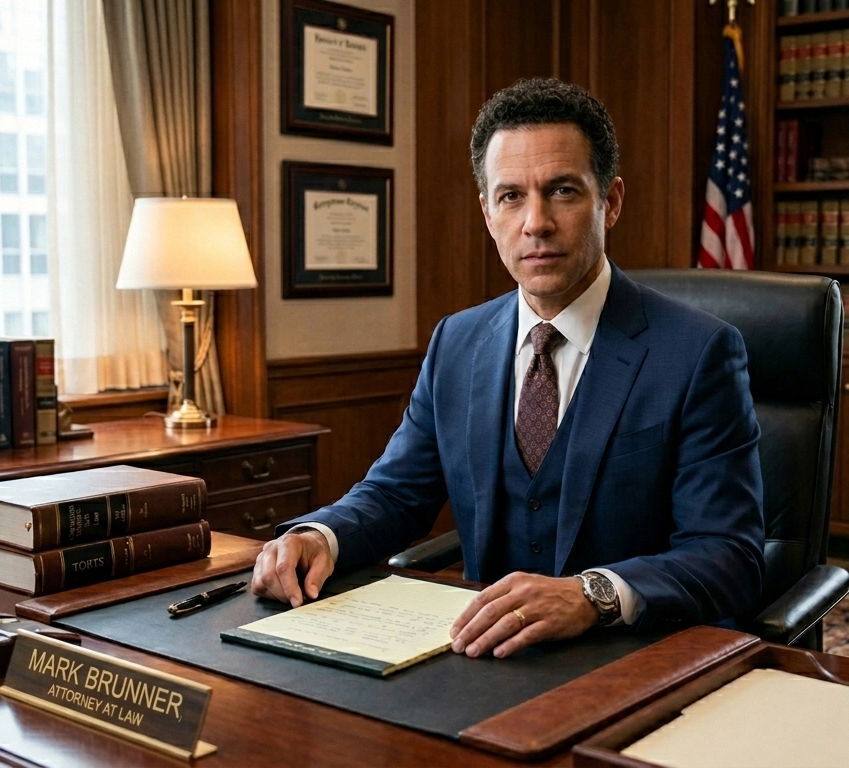
About Mark Brunner
Mark Brunner represents clients in criminal defense and civil rights matters throughout Round Rock, Williamson County, and Central Texas. The firm handles Section 1983 claims alongside its criminal defense practice, recognizing that police misconduct often generates both a criminal case and a civil rights claim from the same event.